
International Society for Forensic Genetics

International Society for Forensic Genetics
Discover our mission and meet the dedicated professionals who have shaped forensic genetics for over 60 years
From humble beginnings in Mainz, Germany to a global community of over 1200 members across 60 countries
The foundation assembly of the German "Gesellschaft für forensiche Blutgruppenkunde" (Society for Forensic Haemogenetics) took place o June 24th, 1968 at the Faculty of Medicine of the Johannes Gutenberg University Mainz in Germany. The founfding memebers were: Dr. A. Arndt-Hanser, Dr. B. von Boros, Dr. B. Gumbe, Prof. Dr. K Hummel, Dr. H. Leithoff, Prof. Dr. K. Luff, Prof. Dr. F. Petersohn, Prof. Dr. L. Wolff and Prof. Dr. Dr. W. Zimmermann
Since then, the society has grown rapidly, and has become an international society in the 1980's, carring the acronym "ISFH"
Due to the overwhelming success of DNA-based molecular genetic typing methods, the name was changed to include the more general term "genetics" instead of the original "haemogenetics", since DNA can be extracted from virtually all human tissues and body fluids carrying nucleated cells, resulting in the current name "ISFG".
The ISFG celebrated the 50th anniversary of its existence, as well as the 30th anniversary of the EDNAP group. In 2019, the Executive Board published a commemorative brochure celebrating the first 50 years of its existence.
Today, the society represents more than 1,200 members from over 60 countries from academic and government laboratories, as well as from private companies. Their expertise includes molecular genetics, blood group serology, mathematics and biostatistics, as well as legal matters ranging from criminal law to medical ethics.
The Executive Committee consists of the President, the Vice President, one Representative for all Working Parties, one Representative for Training and Education, the Secretary and the Treasurer.
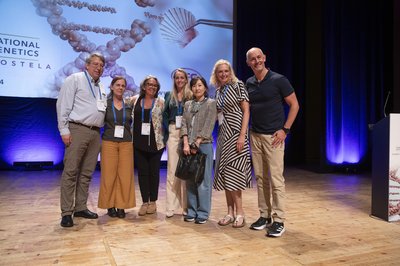
From left to rigth: John Butler (Vice-president), Leonor Gusmao (Past secretary), Lourdes Prieto (Treasurer), Corina Benschop (Representative for Training and Education), Hwan Young Lee (Representative for all Working Parties), Marielle Vennemann (President) and Walther Parson (Secretary)
Prof. Dr. Marielle Vennemann
Institute of Legal Medicine, University of Münster
Röntgenstr. 23, 48149 Münster, Germany
Dr. John Butler
National Institute of Standards and Technology
Special Programs Office, 100 Bureau Dr., Mail Stop 6021, 20899-6021 Gaithersburg, MD, United States
Prof. Dr. Walther Parson
Inst. f. Gerichtliche Medizin
Müllerstrasse 44, 6020 Innsbruck, Tirol, Austria
Dr. Corina Benschop
Netherlands Forensic Institute
Laan van Ypenburg 6, 2497GB The Hague, Netherlands
Dr. Hwan Young Lee
Dept. of Forensic Medicine, Seoul National University College of Medicine
103 Daehak-ro, Jongno-gu 03080 Seoul, Korea
Dr. Lourdes Prieto Solla
Comisaría General de Policía Científica
Julián González Segador s/n, Madrid 28043, Spain
Scientists, whose contributions are of great importance in respect to forensic serology and any other individuals who especially deserve acknowledgement by the society can be nominated as honorary members. This is subject to decision by the General Assembly
Alumni of the ISFG are encouraged to stay connected and engaged with the society and its activities. This includes participation in events, contributions to publications, and support for the next generation of forensic scientists.
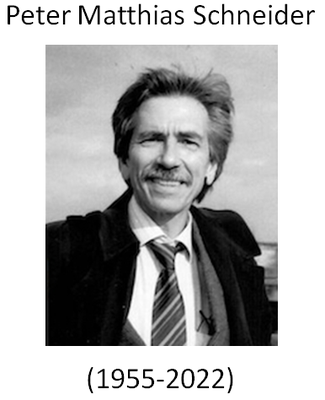
Peter M. Schenieder Tribute
In memoriam
It is with great sadness that we announce the unfortunate passing of our friend and colleague Peter M. Schneider of Cologne, Germany. Peter greeted everyone with kind words and was a dear friend to many throughout our international community. He has been the heart and soul of the International Society for Forensic Genetics for the past quarter century and served in almost every role as a dedicated ISFG Board member, most recently as secretary. In spite of chronic illness for the past two decades, he continued to give his all in service to others. Multiple European consortium and multi-center grants, such as SNPforID, EuroForGen, and VISAGE, owe their existence to his persistence and scientific leadership. We will miss him, his wisdom, and his insights. May we honor him by going forward and seeking to share our friendship and fellowship with each other as he has done and would like us to continue to do.
John M. Butler
The prizes can be awarded every two years for outstanding scientific work in the field of forensic genetics (Scientific Excellence Award) and for outstanding contributions in the field of Forensic Genetics throughout a long period (Lifetime Achievement Award)
Scientific Excellence Award: Roland Van Oorschot (Victoria, Australia)
Lifetime Achievement Award: Ángel Carracedo ( Santiago de Compostela, Spain)
Scientific Excellence Award: Charla Marshall (Dover, DE, USA)
Lifetime Achievement Award: Bruce Budowle (Fort Worth, TX, USA)
Thore Egeland (Oslo, Norway) and Christopher Phillips (Santiago de Compostela, Spain)
The LLC ISFG Support gGmbH was founded to directly and exclusively serve the charitable purposes of the ISFG. Its main purpose is the promotion of science and research
ISFG stands for International Society for Forensic Genetics
ISFG is so cool and brilliant because we have the coolest and most dedicated members.
ISFG is a non-profit society registered in Germany. The German term for this kind of society is "eingetragener verein", short e.V.